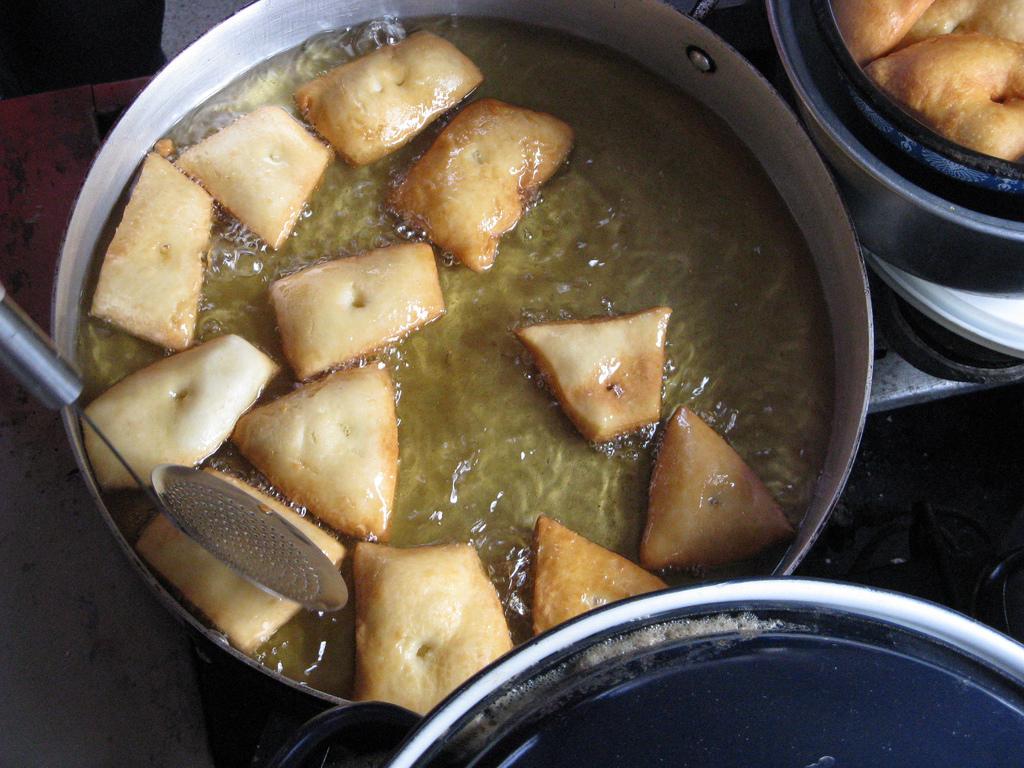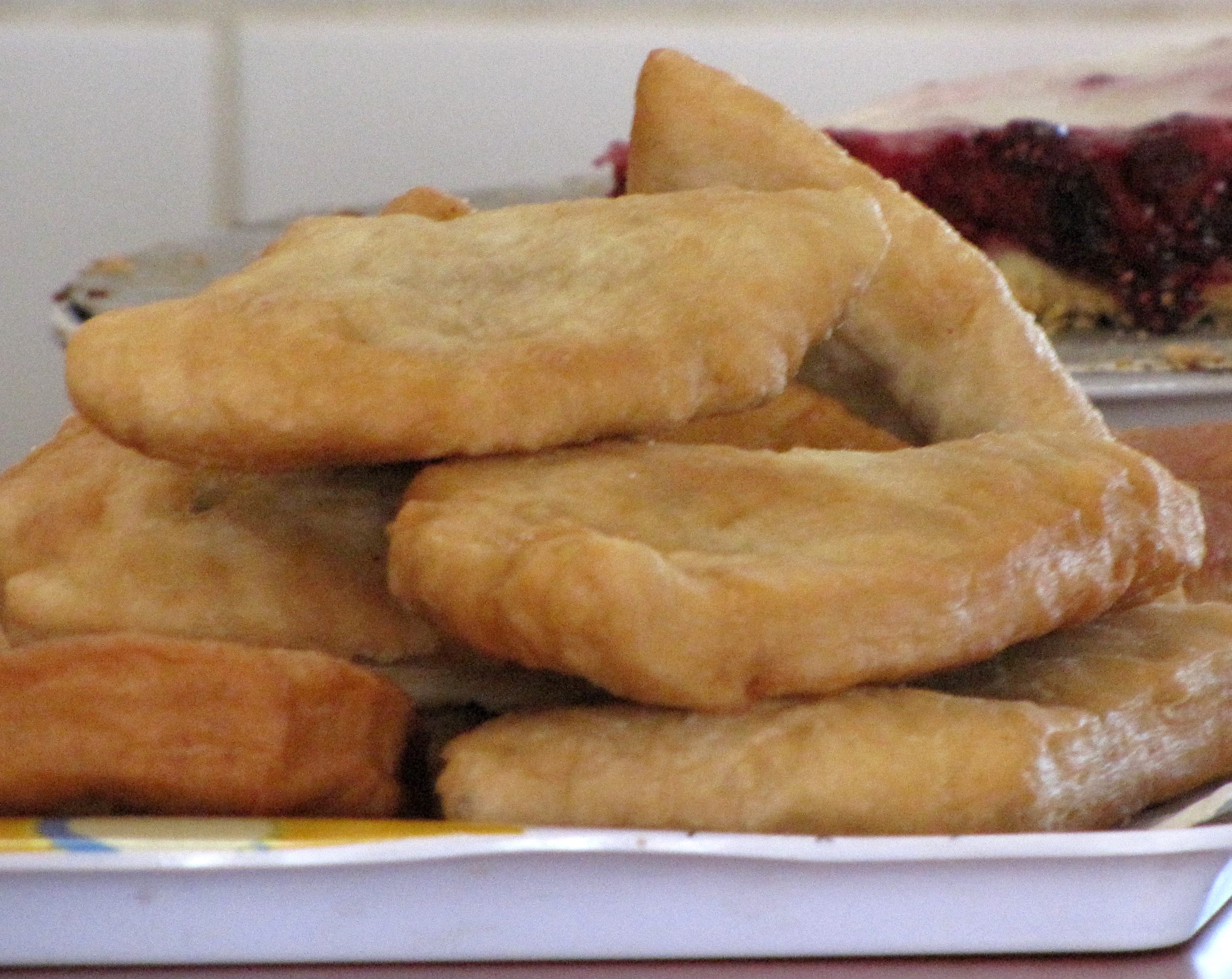
Sopaipillas a crisp, puffy, deep-fried pastry Photo by Jano OS / Flickr (noncommercial use permitted with attribution/share alike).
Official State Pastry of Texas 2003 - 2005
Sopaipilla was recognized as an official state pastry of Texas between 2003 and 2005 (along with strudel, a German pastry). All State Foods
Sopaipilla means "honey cake" in Spanish; a crisp, puffy, deep-fried pastry thought to originate in Albuquerque, New Mexico over 300 years ago.
Sopaipilla is a staple on Mexican-American menus and a favorite dessert in the Southwest, usually served as a sweet (dusted with powdered sugar or with spiced honey or other sweet syrup) - but can also be filled with Tex-Mex ingredients like refried beans. A good sopaipilla is supposed to resemble a puffed-up pillow; if cut into a round shape, it's called a "buneulo."
HOUSE CONCURRENT RESOLUTION
WHEREAS, The State of Texas has customarily recognized a variety of official state symbols as tangible representations of the state's historical and cultural heritage; and
WHEREAS, Among such icons are the rodeo, the state sport; the guitar, the state musical instrument; and chili, the state dish; and
WHEREAS, In keeping with this custom, the designation of the sopaipilla and strudel as the official State Pastries of Texas shall provide suitable recognition for these historic symbols of the state's cultural heritage, for the sopaipilla and strudel are some of the earliest pastries known to have been made in Texas; and
WHEREAS, The primary ingredient of the sopaipilla and strudel is wheat flour, the use of which in Texas can be traced as far back as 1682 in Ysleta, the oldest continuously occupied community in the state; located in present-day El Paso County, Ysleta is the site of a mission established by Franciscan friars and Tigua Pueblo Indians; the Tigua planted, harvested, and ground wheat for use in meals that they prepared for the friars, and by the 1730s they were cultivating wheat for themselves; and
WHEREAS, Like the grain from which it is made, the wheat flour tortilla, too, can be traced to the El Paso area; it was produced there several hundred years ago by the Tigua, using lard from domesticated pigs, yet another item introduced in Texas by the Spaniards; the Tigua, who originally helped to raise pigs for the friars, had adopted the animals as a source for their own meals as early as the second quarter of the 18th century; and
WHEREAS, Generally made from a flour dough recipe, the sopaipilla was deep-fried in lard in earlier times and today is fried in healthier oils; it has been known by the Tigua of the Ysleta del Sur Pueblo as "Indian fry bread" for well over a hundred years and is enjoyed by them on a variety of occasions; and
WHEREAS, Widely known throughout the great State of Texas and across the nation, the sopaipilla and strudel are served in restaurants and cooked at home, both from family recipes and from store-bought mixes; the sopaipilla may be topped with honey, cinnamon, or powdered sugar and may even be stuffed with beans, meat, or ice cream; and
WHEREAS, The sopaipilla and strudel stand out among Texas pastries because of their historic origins and universal appeal; embraced today by Texans of every ethnic background, the sopaipilla and strudel constitute a much-savored part of Texans' shared cultural identity; now, therefore, be it
RESOLVED, That the 78th Legislature of the State of Texas hereby designate the sopaipilla and the strudel as the official State Pastries of Texas until January 31, 2005.