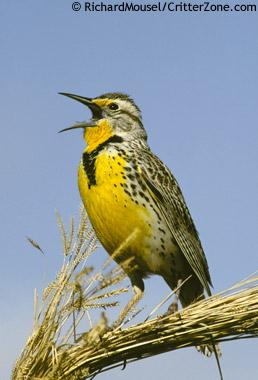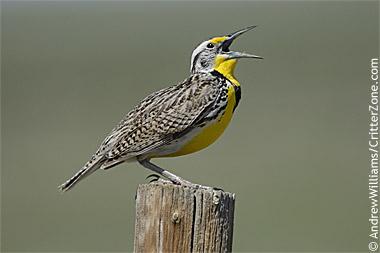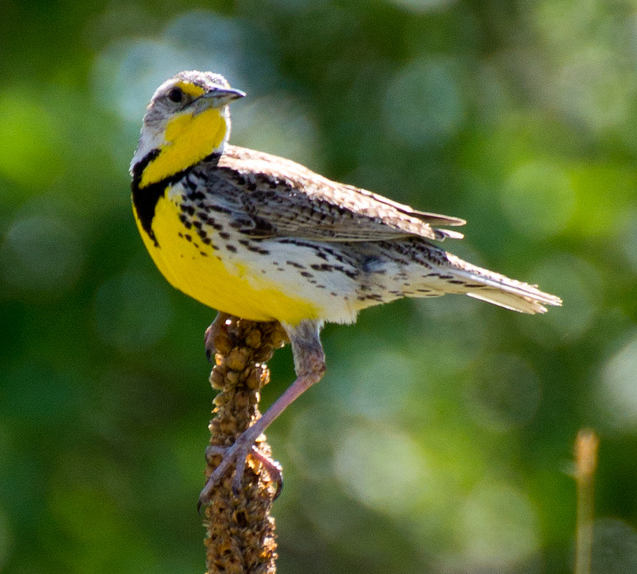
Western meadowlark; photo by Dave Soldano on Flickr (noncommercial use permitted with attribution / no derivative works).
Official State Bird of North Dakota
The western meadowlark (Sturnella Neglecta) was designated official state bird of North Dakota in 1947. Kansas, Montana, Nebraska, Oregon, and Wyoming also recognize the western meadowlark as a state symbol. All State Birds
Western Meadowlark Facts
The western meadowlark is a familiar songbird of open country across the western two-thirds of the continent (from Wisconsin to Texas and west to the Pacific). In the same family as blackbirds and orioles, adults are 8-11 inches long and have a black and white striped head; a long, pointed bill; yellow cheeks; bright yellow throat; and a distinctive black "V" on breast. The western meadowlark is often seen perched on fence-posts in grasslands and agricultural areas singing its distinct 7-10 note melody (their flute-like song usually ends with 3 descending notes).
Western meadowlarks forage on the ground and beneath the soil for insects, grain and weed seeds (it's estimated that at least 65-70% of their diet consists of beetles, cutworms, caterpillars, grasshoppers, spiders, sow bugs, and snails). They also nest on the ground - constructing a cup of dried grasses and bark woven into the surrounding vegetation. This nest may be open or have a partial or full grass roof, and sometimes a grass entry tunnel several feet long.
Western meadowlark predators include hawks, crows, skunks, coyotes, raccoons, and weasels. Western meadowlarks are still abundant but declining throughout their range; they are a protected non-game species.